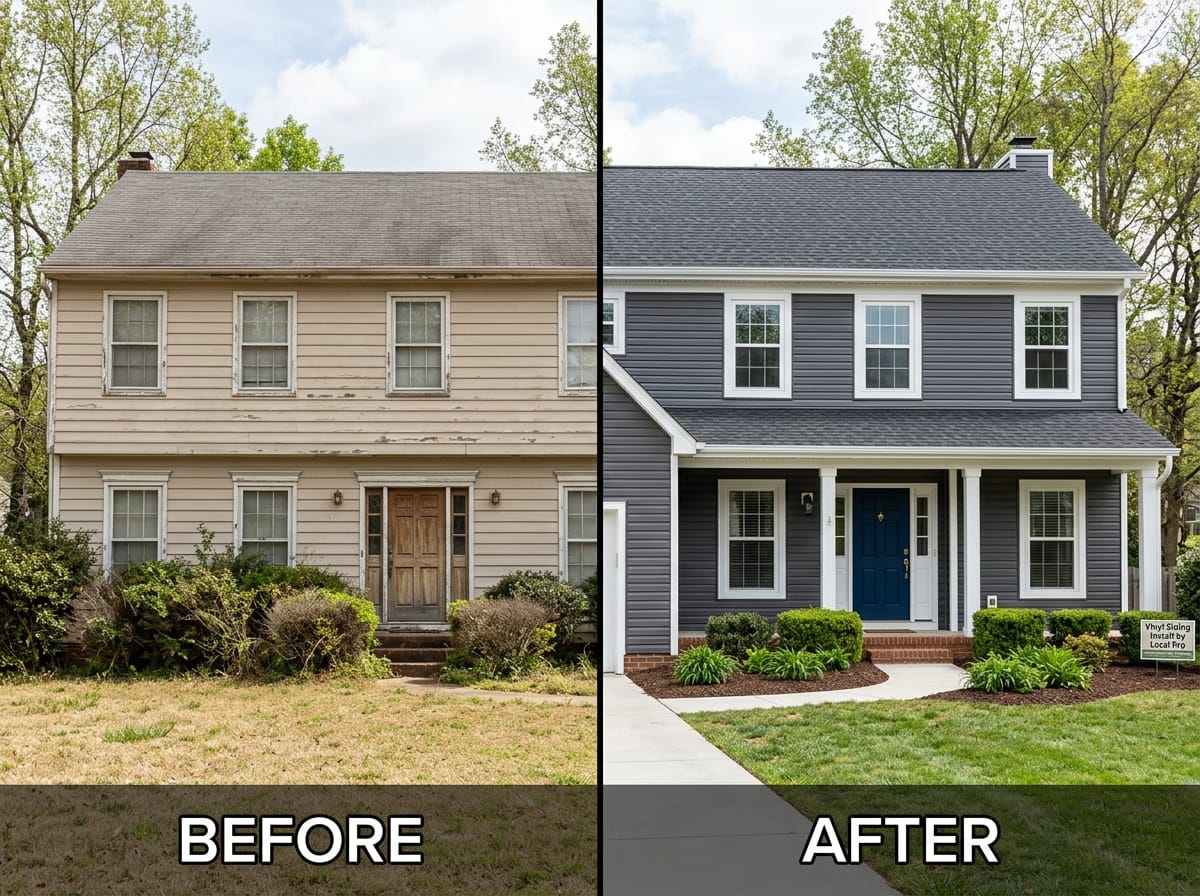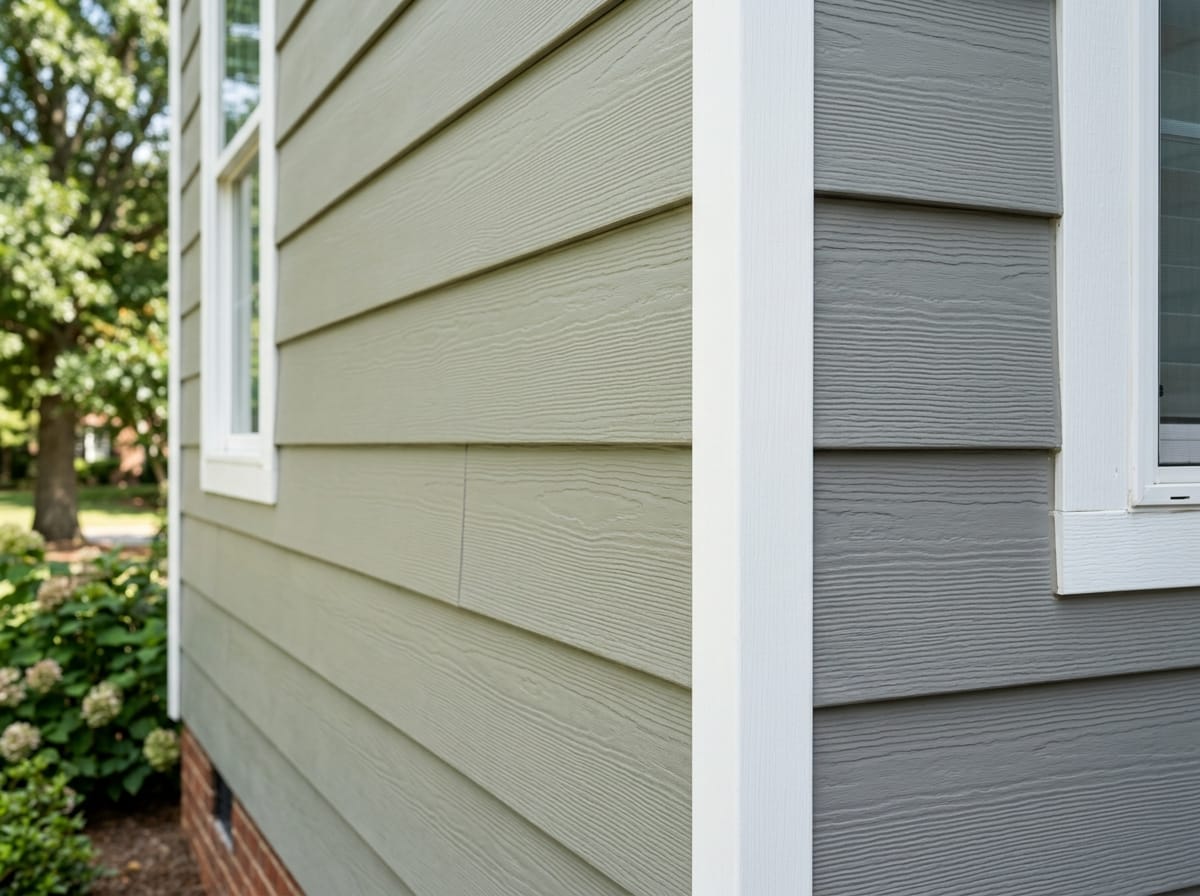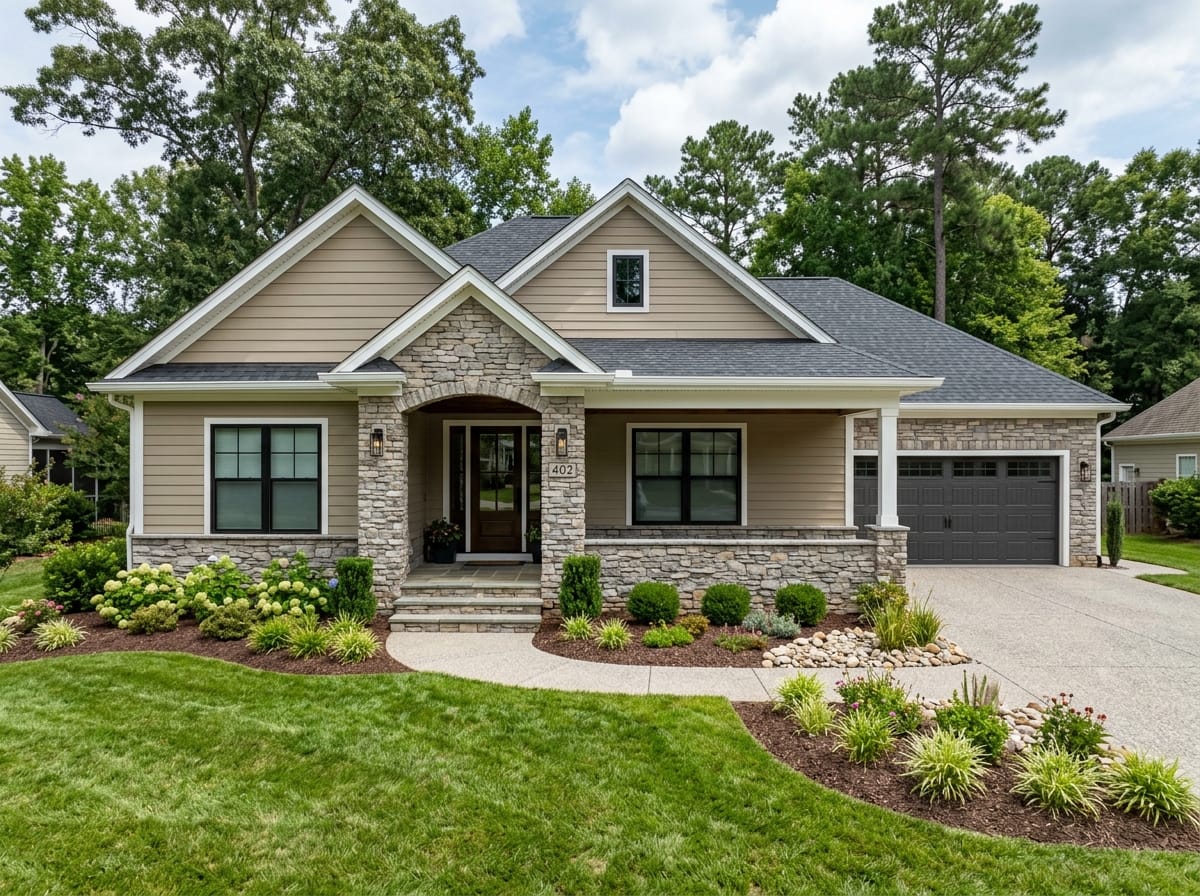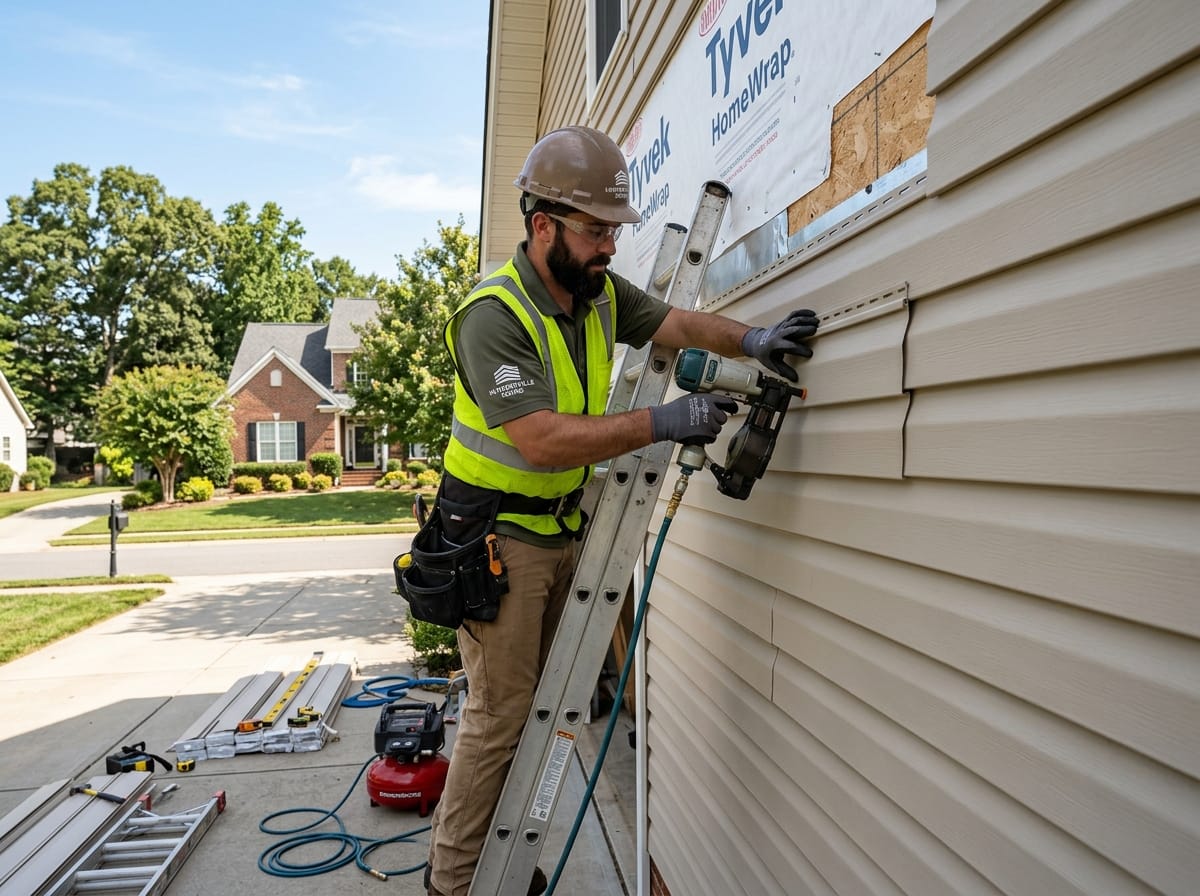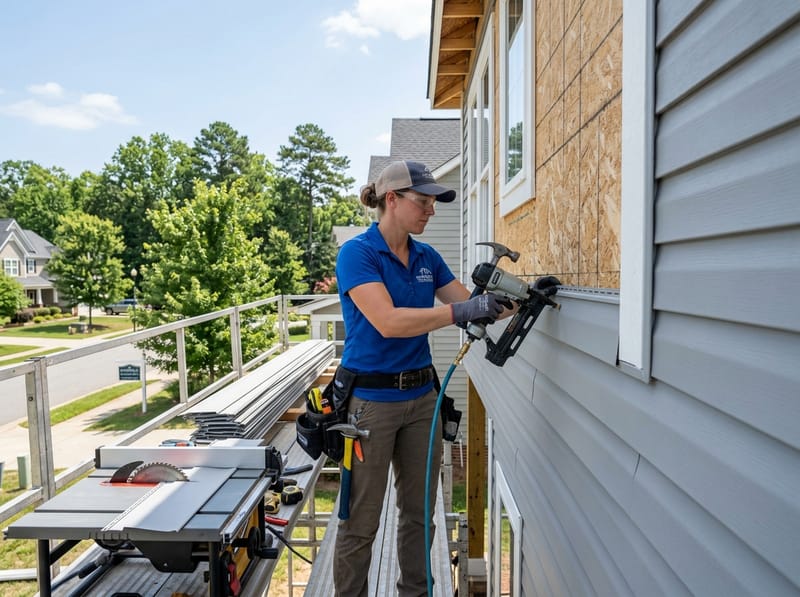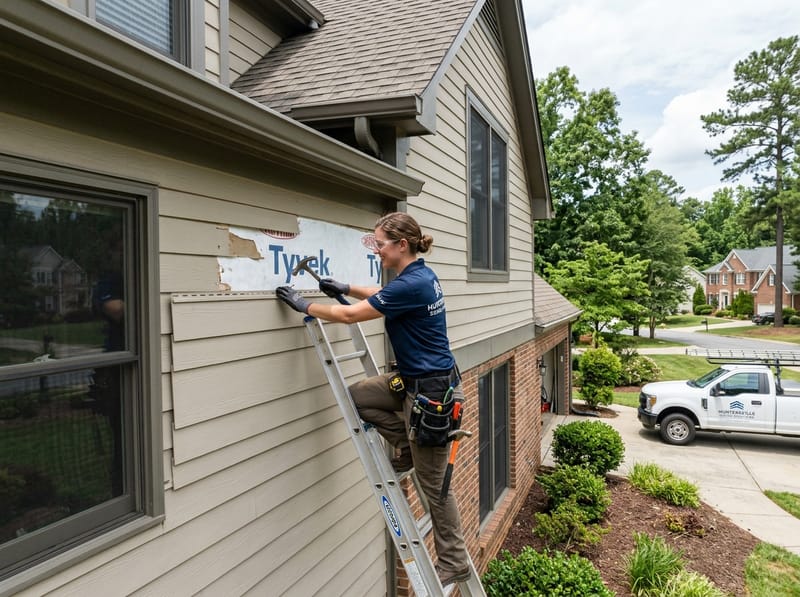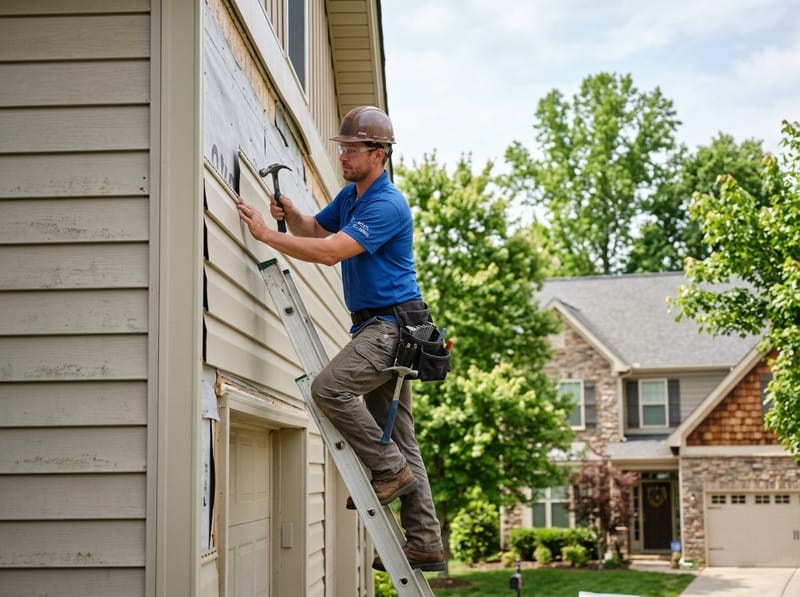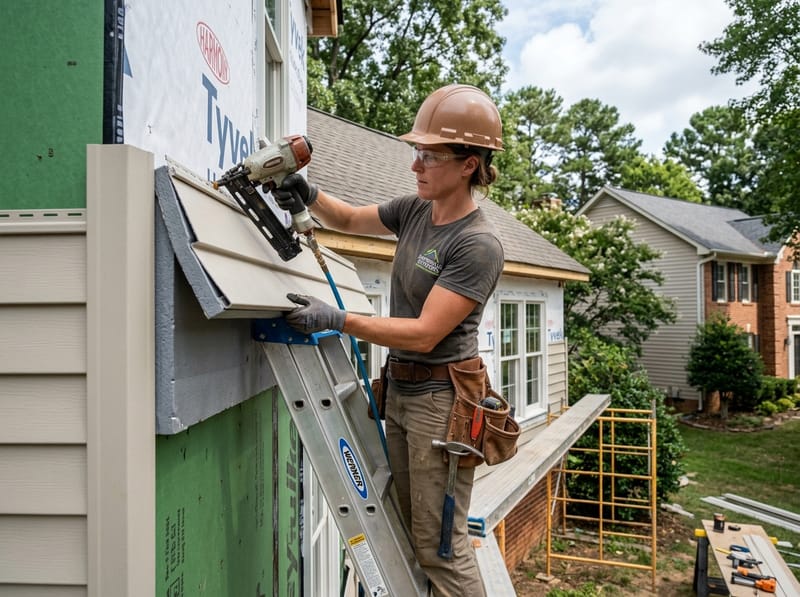
Storm damage repair in Huntersville, NC is a specialized service for homeowners whose vinyl siding or exterior trim has been hit by wind, hail, flying debris, or falling limbs. The goal is not only to replace damaged pieces, but also to make sure the wall assembly stays sealed, aligned, and ready to handle the next weather event. Sturdy Siding Huntersville focuses on exact-fit repair work that blends the new material into the existing exterior and restores dependable protection.
What This Service Involves
Storm damage repair for vinyl siding is a detailed exterior restoration service that addresses visible breaks and the hidden conditions that often follow them. In Huntersville, that can mean replacing cracked siding panels, securing loosened courses, reattaching trim, repairing soffit sections, correcting wind-lifted edges, and sealing openings that could let water reach the wall structure. A strong repair is measured by more than appearance. It must also restore the building envelope so the home sheds rain, blocks drafts, and keeps pests from entering through compromised edges.
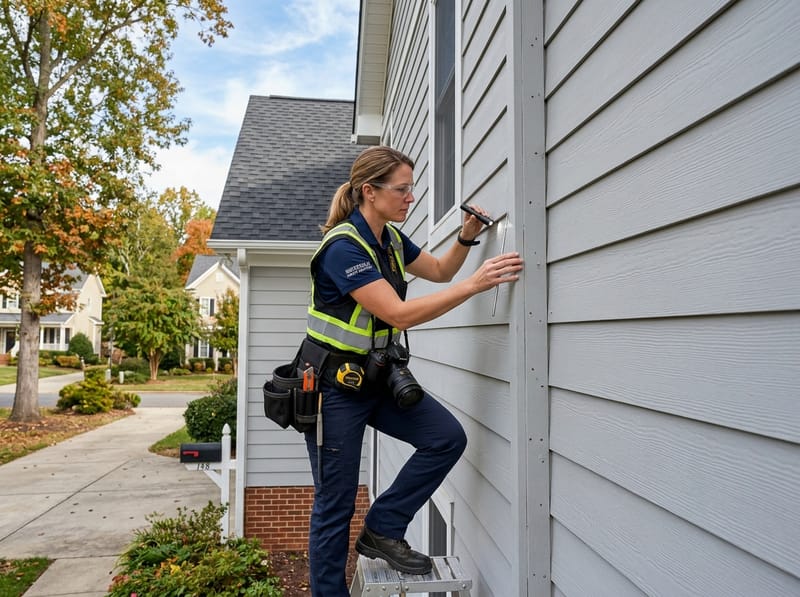
The work usually begins with a close inspection of the affected elevations. A skilled siding specialist looks for punctures, splits, dents, warped panels, torn J-channels, popped fasteners, and any place where the storm shifted the siding away from the wall. Once the damage is mapped, the repair process can include removing the affected pieces without disturbing the surrounding courses, checking the underlayment or housewrap behind the siding, and replacing damaged trim or accessories with parts that match the profile and color as closely as possible.
For vinyl siding, precision matters because panels interlock. If one course is handled poorly, the line of the wall can ripple or the seams can separate. That is why this service uses specialized techniques rather than a quick cosmetic patch. The objective is to restore the original fit, preserve drainage paths, and make the repair hold up under daily sun, wind, and rain exposure.
- Remove damaged siding or trim without enlarging the problem area.
- Inspect the surface behind the siding for hidden moisture entry or impact marks.
- Replace compromised panels with compatible material and proper fastening.
- Rebuild seal points around edges, corners, and transitions.
- Blend the repaired section so the home looks orderly and finished.
This service is especially valuable after storm events because minor exterior damage can become a major repair if moisture gets behind the siding. A careful repair protects the wall cavity, insulation, and framing while preserving the visual character of the home.
When You Need This Service
You need storm damage repair in Huntersville when the exterior no longer looks tight, straight, or secure after severe weather. Some damage is obvious, such as a missing panel or a crack you can see from the yard. Other damage is more subtle and shows up as lifted edges, loose trim, separated seams, or small openings where the siding no longer meets the corner or window trim cleanly. Even damage that seems minor can justify repair because the siding system depends on continuous overlap and stable attachment.
Homeowners should also pay attention to changes in how the exterior behaves after a storm. If a wall starts rattling in the wind, if water appears near an interior wall after rain, or if a section of siding looks pushed in or bowed out, the system may have been compromised. Huntersville storms can move fast, and a strong gust or hail burst can leave enough damage to weaken one side of the home even when the rest of the exterior looks fine.
- Visible cracks, punctures, chips, or torn siding panels.
- Loose or lifted sections that move when the wind picks up.
- Trim pieces that separate from the wall or no longer align tightly.
- Water spots, damp sheathing, or interior staining after a storm.
- Impact marks from hail, limbs, or debris thrown by strong wind.
- Gaps around windows, corners, vents, or transitions in the siding.
If the damage is ignored, the repair usually becomes more complicated. Water can travel behind the siding, insulation can lose performance, and the wall assembly can deteriorate in places that are not visible from the outside. Fast response reduces the chance of hidden problems and helps keep the repair focused and manageable.
Why Problems Happen
Storm damage happens because vinyl siding is designed to flex and shed water, not absorb repeated impact or resist strong outward pressure forever. In Huntersville, wind can drive rain sideways, lift the edges of panels, and stress the fasteners that hold the siding in place. Hail can chip, dent, or split exposed surfaces. Flying branches and debris can punch through sections that would otherwise handle normal weather just fine.
The most common cause is a mix of force and exposure. A home that already has aging sealant, stressed fasteners, or slightly loosened panels is more vulnerable when a storm arrives. Once one piece shifts, nearby pieces often move as well because vinyl siding works as a connected system. That is why one damaged area can affect a larger section of the wall than the homeowner first expects.
Another cause is hidden movement in the home itself. Temperature swings make vinyl expand and contract, and strong storms amplify that movement. If the siding was installed with tight spacing, if trim was not set cleanly, or if previous patch work left weak edges, the system may fail sooner under storm pressure. A master craftsman looks at the whole wall, not just the obvious break, because the root issue is often a structural or attachment problem rather than a single cracked board.
- Wind pressure that lifts or rattles siding courses.
- Hail impact that dents, fractures, or weakens panels.
- Falling limbs and flying debris that strike exposed elevations.
- Aged fasteners, brittle seal points, or loosened trim edges.
- Improper previous repairs that left gaps or weak attachment.
Understanding the cause matters because the repair method should match the damage pattern. A clean panel replacement is enough in some cases. In others, the repair must include trim reconstruction, fastener correction, or moisture checks behind the wall. That is the difference between a surface fix and a dependable restoration.
What Affects Cost
The cost of storm damage repair in Huntersville depends on the actual condition of the home, not on a one-size-fits-all formula. The biggest factor is the amount of material that must be removed and replaced. A single damaged panel is simpler than a larger section where multiple courses, trim pieces, and accessories were affected. The location of the damage also matters. Repairs near a roofline, corner, gable, or second-story wall often require more setup and more careful handling than work on an easy-access section.
Material matching can also influence the scope of the job. If the exact siding profile, grain, or color is still available, the repair can be more straightforward. If the existing siding has faded from sun exposure or the original product is no longer common, the specialist may need to source the closest possible match and plan the repair more carefully so the finished result looks cohesive. Hidden damage behind the siding is another major factor because moisture checks, underlayment repair, or trim reconstruction add steps that are not obvious from the street.
Access, height, and complexity affect the time and equipment needed to complete the work correctly. A repair above a porch roof, around a bay window, or along a steep wall edge requires more precision than a straightforward open wall section. The repair method also changes when the storm affected soffit, fascia, or surrounding trim, because those components must be integrated with the siding rather than fixed in isolation.
- How much siding or trim is actually damaged.
- Whether hidden moisture or sheathing damage is present.
- The difficulty of matching existing siding and trim details.
- Accessibility of the damaged wall section.
- Whether the repair includes related components such as soffit, fascia, or corner trim.
Homeowners get the best value when the repair is sized to the real issue. A careful diagnostic visit keeps the work focused, avoids unnecessary replacement, and makes sure the final result is both durable and visually consistent.
Repair vs. Replacement
For many homes, repair is the correct first choice when storm damage is isolated and the rest of the siding system is still performing well. If the damage is limited to a few panels, a short run of trim, or one elevation section, targeted repair can restore the home efficiently without disturbing healthy material. That approach keeps the project practical and preserves the existing exterior when most of it still has useful life.
Replacement becomes the better path when the damage is widespread, the siding is already fragile, or the existing product cannot be matched closely enough to make a clean repair. If multiple walls are affected, if the siding has become brittle across large areas, or if hidden moisture has caused broader deterioration, patching individual spots may only delay a larger problem. In those cases, a more complete replacement plan can deliver a stronger long-term result.
The right answer depends on the condition of the wall system, the extent of the storm impact, and the homeowner's goals for appearance and durability. A skilled siding specialist should explain which sections can be repaired, which sections should be replaced, and why. That clarity helps homeowners make a practical decision instead of guessing based on the most visible damage alone.
In general, choose repair when the damage is localized, the existing siding is sound, and the replacement pieces can be matched well. Consider replacement when the siding is aging across the home, when damage is spread across multiple elevations, or when the storm exposed deeper structural or moisture issues that make small fixes inefficient.
How We Perform Storm Damage Repair in Huntersville
Sturdy Siding Huntersville approaches storm damage repair with a methodical process that is built for vinyl siding systems. The first step is a visual and hands-on inspection of the damaged area. That inspection identifies loose panels, broken lock edges, stress points, and signs that water may have traveled behind the siding. The next step is a repair plan that matches the actual damage, not a generic patch.
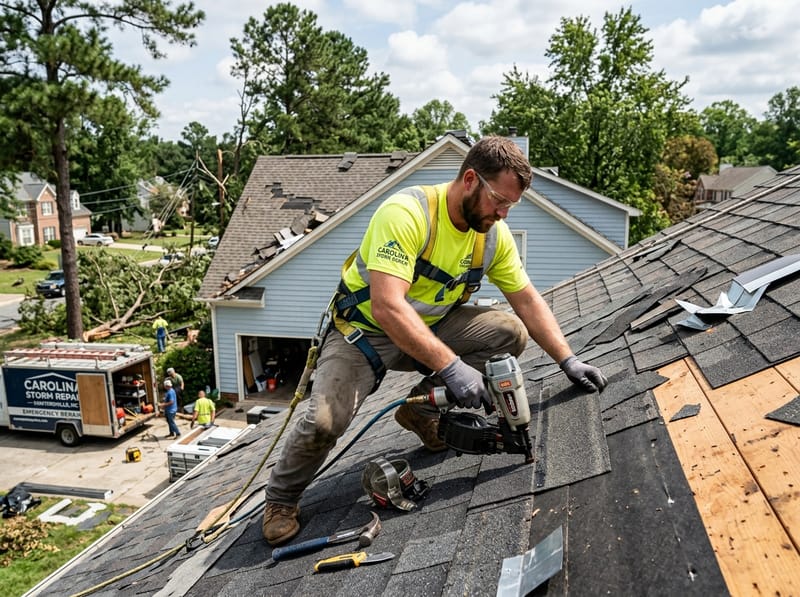
Once the scope is clear, the damaged sections are carefully removed. This has to be done with control because vinyl siding interlocks from course to course. The surrounding pieces must stay intact so the wall line remains straight and the new material can lock in properly. If the underlayment, sheathing, or trim behind the siding has been exposed, those components are checked and corrected before the new siding goes on. That sequence protects the repair from future moisture problems.
After the prep work, replacement pieces are fitted, cut, and fastened with the correct spacing for movement. Vinyl siding needs room to expand and contract, so a good repair avoids over-tight fastening and keeps the panel channels aligned. Corner trim, J-channel, starter strips, and adjacent accessories are then reset or sealed as needed so the repaired area drains and vents properly. The final stage is a quality check that confirms the wall looks consistent, the seams are secure, and the surface is ready for weather.
- Inspect the damaged wall and surrounding sections.
- Remove compromised siding, trim, or accessories with precision.
- Check the backing surface for moisture entry or hidden damage.
- Install matched replacement pieces using proper vinyl siding methods.
- Seal transitions and verify that the repaired area blends cleanly.
This process is designed to restore both appearance and performance. A repair should leave the home looking finished while also rebuilding the barrier that protects the structure underneath.
Why Homeowners Call Sturdy Siding Huntersville
Homeowners in Huntersville call Sturdy Siding Huntersville because storm damage repair is a technical job that rewards detail, judgment, and careful execution. Vinyl siding is simple in appearance, but the system depends on correct alignment, proper fastening, and clean transitions at every edge. When the repair is done with that level of control, the result is stronger, cleaner, and more dependable than a quick cosmetic fix.
Our work focuses on exact diagnosis, careful material handling, and repairs that fit the home instead of forcing a one-size approach. That matters when the goal is to protect the wall system, preserve curb appeal, and avoid repeat problems after the next storm. We treat each damaged section as part of a larger exterior system, which is the right way to handle storm damage repair in Huntersville.
For homeowners, the benefit is straightforward: you get a clear answer, a targeted repair plan, and restoration work that is built around how vinyl siding actually performs in the field. That combination of technical knowledge and practical execution is what keeps the exterior sound after severe weather.